
Back
01 · Software & Web Applications

Custom Web Application Development for Real Business Operations

A web application is interactive software used through a browser. People sign in, records change, and the system enforces a workflow. That is a different product from a marketing website, which presents the business and asks a visitor to enquire. We design and build the operational platform: portals, administration, dashboards, databases, reporting, integrations and the automation between them.

Not just a better interface. A better way for the business to work.

A laptop and a paper workflow map on a studio desk

What This Includes

  • Discovery & Requirements Analysis
  • Workflow & Production-Flow Assessment
  • UX, Interface & Application Design
  • Solution architecture
  • Frontend & Backend Development
  • APIs & Third-Party Integrations
  • Data & Database Design
  • Authentication & Role-Based Access
  • Automated & User-Acceptance Testing
  • Hosting, Staging & Deployment
  • Monitoring, Support & Continuous Improvement

Operational software, used in the browser

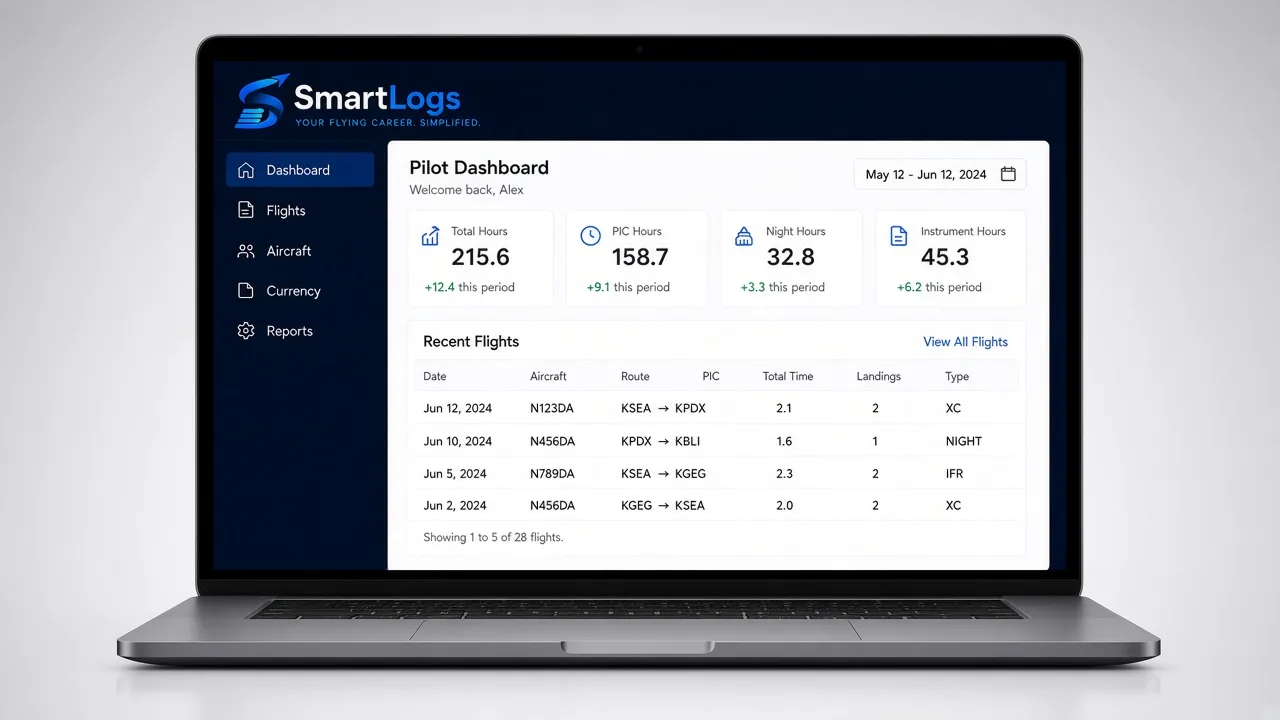
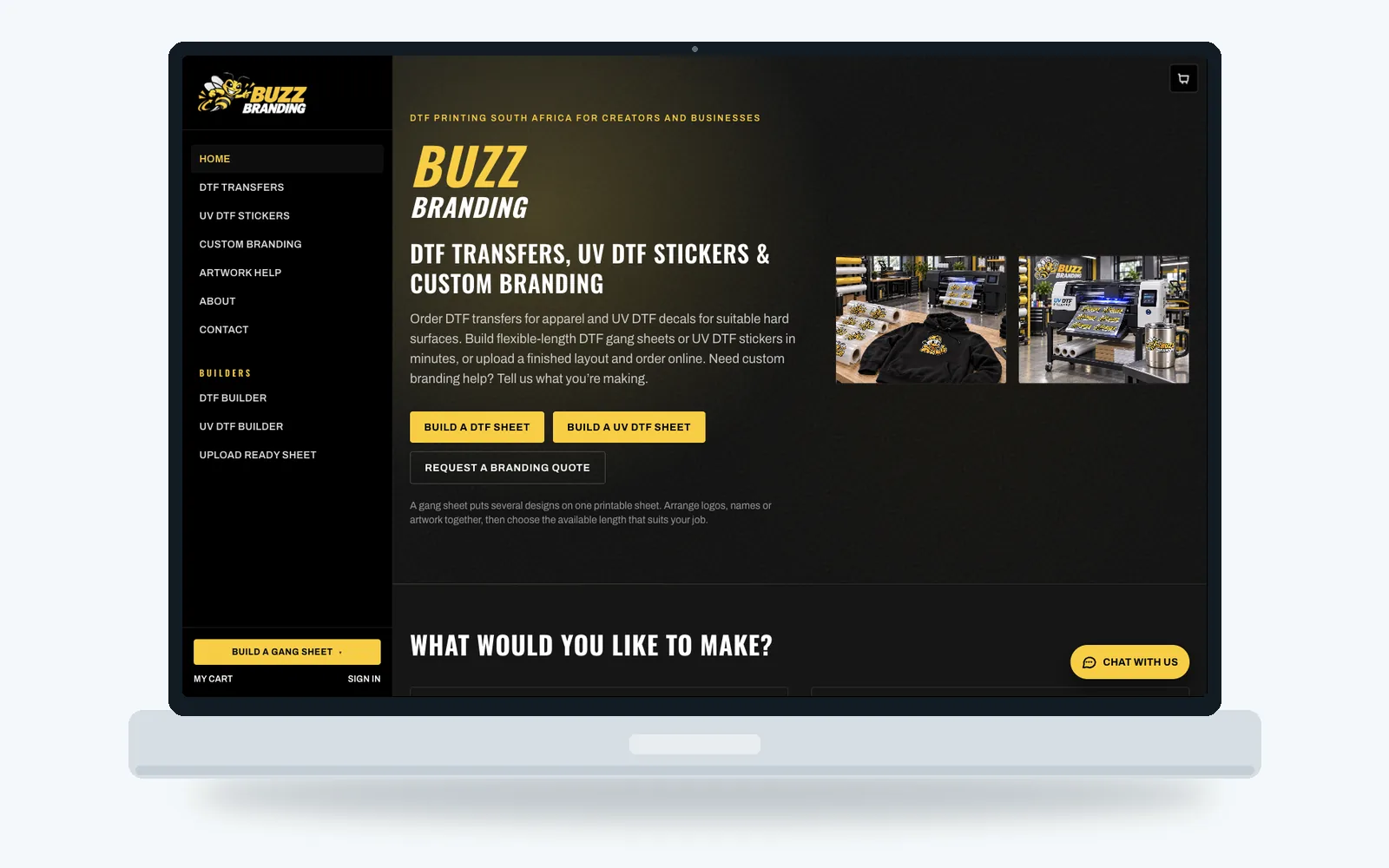
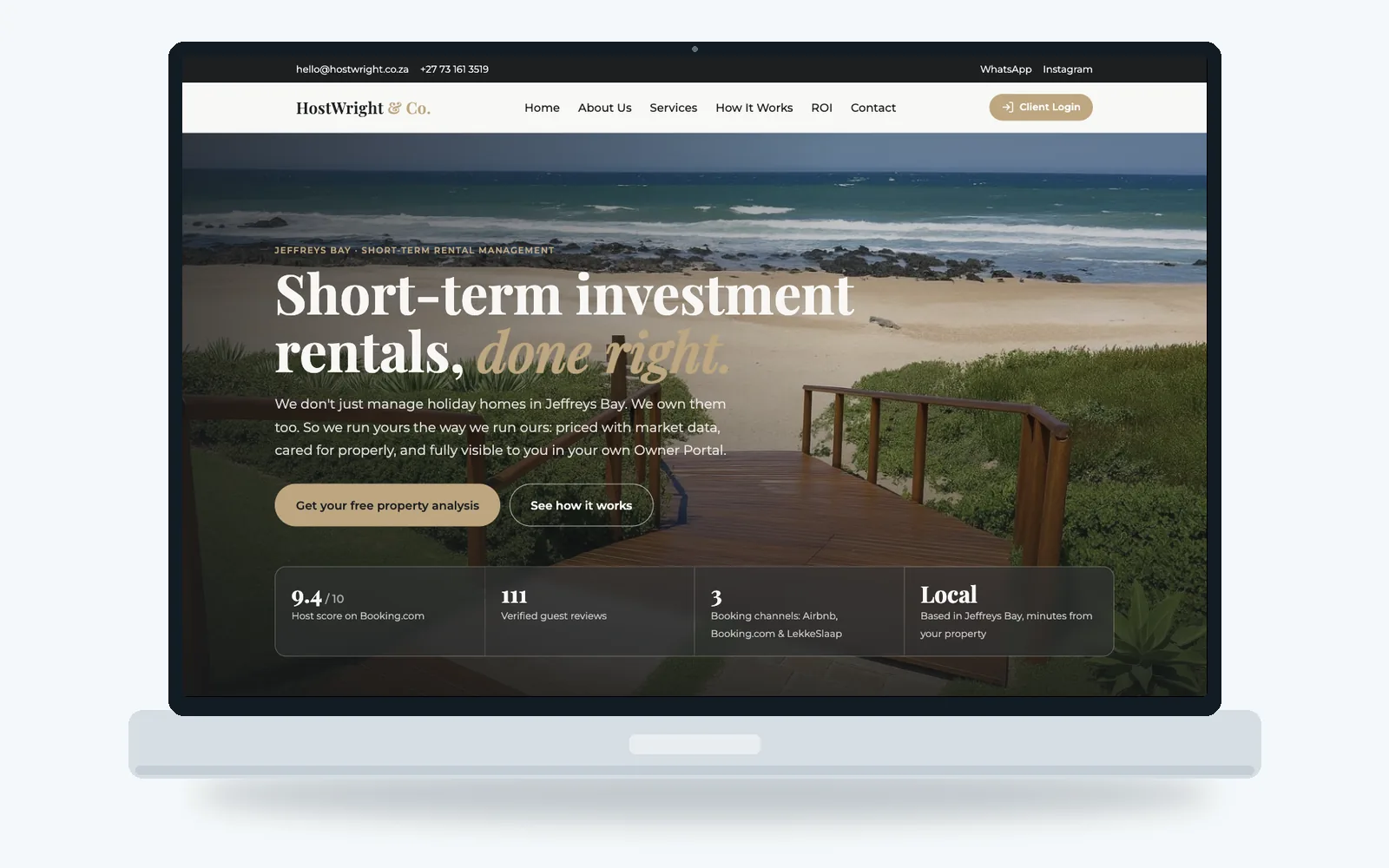
The application is the place work happens: a portal for customers or owners, an administration system for the team, a dashboard for the numbers, and role-based access so each person sees their own records. HostWright separates admin and owner sign-in. Buzz Branding separates the print team, the accountant’s exports and the client account. SmartLogs gives each pilot a signed-in career record. Responsive layout means the same system is usable on a phone. HostWright and Buzz Branding remain browser applications; SmartLogs also ships as Capacitor native apps for iOS and Android.
Databases, reporting, integrations and automation

These platforms are database-backed. Reporting sits on the same records as the work, rather than in a file someone rebuilds at month end. Integrations are specific: payment confirmation, calendar feeds, file export, email, camera and sensor access on native shells. Automation is a rule the business already had — a cleaning briefing, a price calculation, a payment that must clear before production, a currency expiry — carried out by the system. SmartLogs is the studio’s own multi-pilot product. HostWright and Buzz Branding are built for those organisations’ owners and customers.

Ongoing product development

Launch is the point the operation starts depending on the system. HostWright is still supported and extended as more homes are added. Buzz Branding’s changes go through staging, with an automated test suite before each release. SmartLogs continues as a product with separate web and mobile release scripts. Later features are scoped against how the software is actually used.

We begin with the operation, not the interface

Before writing code, we assess what the business needs to achieve, how work currently moves through the organisation, where delays and duplication occur, who needs access, and what information each person requires. This turns the project into an operational improvement initiative — not simply a software build.

Workflow and production-flow assessment

We map the current process from input to outcome: people, responsibilities, approvals, systems, data and handovers. We then design a more streamlined future process that reduces manual work, improves visibility and makes important actions easier to control and measure.

Purpose-built application design

The application layout is designed around real roles and tasks. Customer interfaces, staff workspaces, administration areas and dashboards each receive the information and controls they need — without unnecessary complexity. Prototypes make the proposed experience clear before full development begins.

Architecture designed for the requirement

We define the application structure, data model, permissions, integrations, hosting approach and operational requirements before committing to implementation. HostWright runs on the client’s existing cPanel hosting. Buzz Branding uses separate staging and production environments. The hosting and release plan follows the actual requirement rather than a platform claim.

From client frontend to advanced backend systems

We develop the complete application where required: responsive client-facing experiences, secure internal portals, APIs, business logic, databases, workflow automation, reporting and administration tools. Frontend and backend application development is treated as one coherent system rather than disconnected technical parts.

Integration with your current infrastructure

A new application does not always require replacing everything that already works. We can integrate with existing databases, services, identity systems, business tools and APIs; modernise selected components; or design a new architecture where no suitable foundation exists. Discovery determines whether integration, progressive modernisation or a new build creates the best outcome.

Security and access designed in from the start

Authentication, authorisation, role-based access, data protection, auditability and secure configuration are treated as architectural requirements — not additions at the end. The required controls are matched to the sensitivity of the information, user roles, regulatory context and operational risk of the application.

Testing before implementation

Quality assurance can include unit, integration, functional, user-acceptance, security, performance and recovery testing according to the project risk. Staging environments and repeatable deployment processes allow the system to be verified before production release and reduce the risk of changes after launch.

Launch is the beginning of operation

Implementation includes production readiness, deployment, configuration, data migration where required, documentation and handover. After launch, monitoring, maintenance, incident response, performance review and planned improvements help keep the application reliable and aligned with the business as it changes.

Business Systems, Not Templates.

The right application depends on the process it needs to improve. We develop focused systems for customers, teams and operations rather than forcing a business into a generic product. The list below is the range we can design and build. Delivered platforms are in the portfolio.

  • Client and customer portals
  • Internal operations and workflow platforms
  • Quotation, ordering and approval systems
  • Booking, scheduling and resource-management tools
  • Production and job-tracking applications
  • Inventory and fulfilment systems
  • Reporting and management dashboards
  • Secure document and data portals
  • API-driven integrations and automation hubs
  • Legacy-system interfaces and progressive modernisation
  • Multi-role administration platforms

Built For The Real Operating Environment.

There is no universally correct technology stack. A low-volume internal workflow tool should not carry the same architecture or operating cost as a high-traffic customer platform. We select an approach based on the users, data, integrations, transaction volume, availability needs, security obligations, internal capabilities and expected growth of the system.

Where appropriate, the architecture can support the capabilities below. The final architecture and controls are defined during discovery according to requirements, risk and budget — they are not a default checklist for every project.

  • Responsive, accessible web interfaces
  • Secure authentication and role-based permissions
  • API-first communication between systems
  • Relational or purpose-built data stores
  • Background processing and event-driven workflows
  • Third-party and legacy-system integration
  • Hosting selected around the client’s operating environment
  • Automated tests around critical business rules
  • Scheduled jobs for repeatable operational tasks
  • Separate development, staging and production environments
  • Repeatable release and deployment checks
  • Ongoing maintenance as the operation changes

From Operational Need To Production System.

Every application is different, but the discipline behind a reliable build should not be. Our process creates alignment before development, validates decisions before launch, and gives the finished system a clear path into production.

  1. 01

    Concept & Discovery

    We define the business objective, users, constraints, risks and measures of success. Stakeholder discussions and requirements analysis establish what the application must accomplish — and what it should not attempt to do.

    Outputs: Discovery summary, scope boundaries, user groups, requirements, priorities, risks and success criteria.

  2. 02

    Workflow & Layout

    We assess the current production flow and design a streamlined future process. User journeys, information architecture, wireframes and prototypes translate that process into an application people can understand and use efficiently.

    Outputs: Current-state and future-state workflow, user journeys, application map, wireframes and interface prototype.

  3. 03

    Solution Architecture

    We design the technical foundation: application components, data model, APIs, integrations, user roles, security boundaries, hosting, deployment and operational requirements. Existing infrastructure is retained or integrated where it remains valuable.

    Outputs: Solution architecture, data model, integration plan, security approach, environment plan and delivery roadmap.

  4. 04

    Development

    We build the frontend, backend, APIs, integrations, databases and administrative capabilities in controlled increments. Regular demonstrations keep stakeholders aligned and allow practical feedback before decisions become expensive to change.

    Outputs: Working application increments, source code, infrastructure configuration and technical documentation.

  5. 05

    Testing & Validation

    We verify the application against its requirements and real workflows. The test strategy is proportional to risk and may include automated tests, integration testing, user acceptance, accessibility, security, performance and recovery checks.

    Outputs: Tested release candidate, resolved defects, acceptance record and production-readiness checklist.

  6. 06

    Implementation & Evolution

    We deploy the application, configure production services, migrate data where required, monitor the release and support adoption. The system can then evolve through measured improvements informed by operational needs and real usage.

    Outputs: Production deployment, monitoring and alerts, handover documentation, support plan and improvement roadmap.

Your Business Process Deserves More Than A Workaround.

If spreadsheets, disconnected tools or repetitive manual steps are limiting the operation, let us assess the process and design a system around what the business actually needs.

Ready To Build
Something Great?

Tell us about the software, website or brand you want to build.

Same Passion. Bigger Possibilities.